Why 2026 Football Rules Changes Reshaped the Game
The biggest 2026 football rules changes are not universal: NCAA college football, the NFL and NFHS high school football each adopted different updates for their own competitions. NCAA changes address....

Why 2026 Football Rules Changes Reshaped the Game
The biggest 2026 football rules changes are not universal: NCAA college football, the NFL and NFHS high school football each adopted different updates for their own competitions. NCAA changes address targeting penalties, replay administration, player safety, technology and the new fair catch kick, while the NFL modified kickoff alignment, touchback placement, onside-kick declarations and disqualification reviews. NFHS approved wrist-and-belt play cards and prohibited players from slapping an opponent’s head, with mouthguard restrictions effective in 2026 and sleeve specifications beginning in 2027. The College Football Officiating (CFO), National Football Foundation (NFF), NFL Football Operations and National Federation of State High School Associations (NFHS) are therefore the key authorities to monitor. Before predicting a match or interpreting a penalty, identify the governing code, season and competition level.
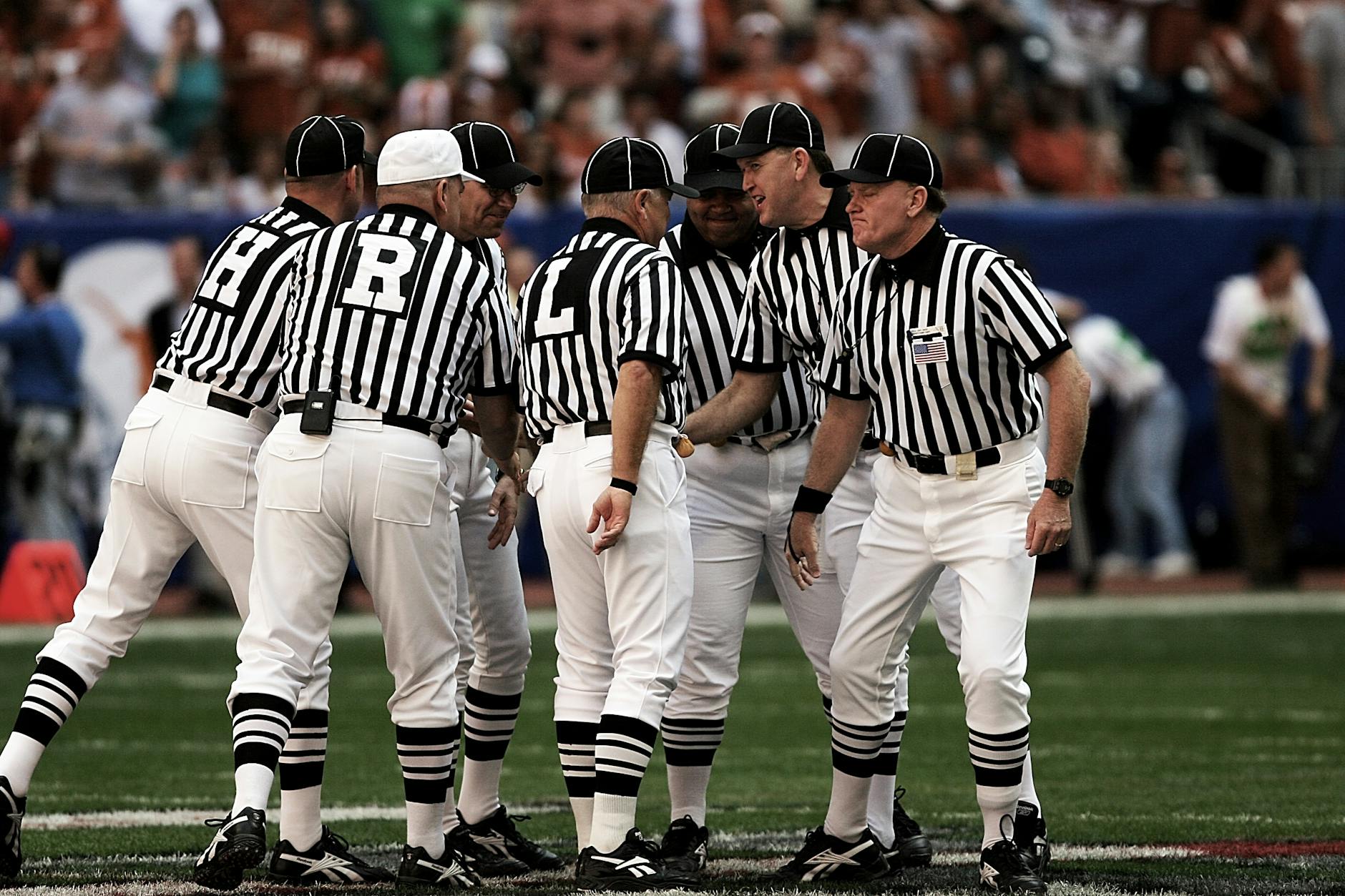
Photo by Pixabay on Pexels
Football rule changes are rarely cosmetic. A single definition can alter fourth-down strategy, field position, player availability and the expected value of a possession. I’ll be honest with you: many articles collapse NCAA, NFL and high school rules into one imaginary rulebook, which is an analytical disaster. The same word—“targeting,” “touchback” or “fair catch”—can carry different procedures depending on the competition.
For supporters using Goal Moments to follow 2026 World Cup coverage, this distinction matters even more. FIFA association football and American football are separate codes; FIFA’s 2026 tournament rules do not automatically adopt NCAA or NFL amendments. Goal Moments focuses on match predictions, tactical analysis, player statistics and tournament coverage, but readers comparing football terminology must first establish which sport and regulator they mean.
Want a concise starting point for the season’s major developments?
Is football rules changes 2026 really a single rulebook?
No. “Football rules changes 2026” describes several separate regulatory packages: NCAA rules for college football, NFL rules for professional football and NFHS rules for U.S. high school football. Their effective dates, enforcement mechanisms and tactical consequences differ, so a reliable analysis must label the code before describing any amendment.
The cleanest framework is to divide the changes into three jurisdictional groups:
- NCAA college football: targeting, replay, safety, technology, game administration and the fair catch kick.
- NFL professional football: kickoff setup-zone alignment, touchback location, onside-kick declarations and league consultation on disqualification.
- NFHS high school football: play-card placement, head-slapping language, mouthguard attachments and future sleeve specifications.
The NCAA football rules information and NFL Football Operations rulebook should be treated as primary references rather than social-media summaries. The NFHS publication also separates actual rule changes, reminders, editorial corrections and points of emphasis. That classification is not bureaucratic decoration: an editorial change may clarify wording without changing the competitive outcome, while a penalty amendment can shift win probability immediately.
A useful operational rule is this: if a preview does not name NCAA, NFL, NFHS or FIFA, do not assume its interpretation is transferable. For bettors, analysts and coaches, the expected cost of using the wrong code is straightforward—incorrect injury assumptions, incorrect penalty probabilities and incorrect field-position models.
[Internal Link: 2026 football prediction methodology]
NCAA changes: why targeting remains the analytical fault line
The 2026 NCAA package places targeting, replay procedures and player safety near the center of officiating discussion. The College Football Officiating organization, led during the announcement period by Steve Shaw, presented the changes alongside the NFF before the 2026 college season. The practical point is not merely that targeting exists; it is that review and enforcement determine whether a defender remains available for the next meaningful game segment.
A disciplined analyst should record four variables:
- The initial on-field ruling.
- Whether replay review confirms, overturns or reduces the decision.
- The down, distance and field position when the incident occurs.
- The player’s role and replacement quality after any disqualification.
That fourth variable is routinely ignored. Losing a rotational defensive tackle is not equivalent to losing a starting safety who communicates coverage checks. Therefore, a targeting event can have an effect larger than the penalty yardage itself. In expected-value terms, the total impact is approximately immediate field position plus possession effect plus personnel degradation.
The 2026 NCAA changes also include technology and operational adjustments intended to make officiating more consistent. However, technology does not eliminate judgment; it reallocates judgment toward review criteria, video angles and timing. The CFO’s own explanation emphasizes that rule development seeks to protect player health and the image of the game, a priority documented through the National Football Foundation announcement.
See the core NCAA developments before evaluating college betting markets.
How does football rules changes 2026 handle kickoffs and fair catches?
The 2026 kickoff changes are competition-specific: the NFL alters kickoff alignment, touchback placement and onside-kick declarations, while NCAA football introduces the fair catch kick as a distinct strategic option. These amendments affect field position and scoring expectancy, but they should not be combined into one generic “kickoff rule.”
The NFL changes listed by NFL Football Operations include:
- Modified alignment requirements for receiving-team players in the kickoff or safety-kick setup zone.
- A modified dead-ball spot after a touchback when the kick begins at the 50-yard line.
- Permission for the kicking team to declare an onside kick at any time during the game.
- A process allowing league personnel to consult on potential disqualification for flagrant football and non-football acts, even when officials did not initially call the act.
The onside-kick amendment is particularly important because timing becomes less predictable. A team no longer needs to wait for a conventional late-game script before considering the option, although tactical value still depends on score differential, recovery probability and field position. A coach may possess legal flexibility without possessing positive expected value; those are not synonyms.
The NCAA fair catch kick is equally interesting because it creates a scoring possibility after a fair catch under applicable conditions. It is not an automatic free three points, and its value depends on the catch location, clock state, wind, kicker range and defensive alignment. Analysts who model only touchdowns, field goals and punts will misprice the rare situation unless they add a separate fair-catch-kick state.
The hidden information gain: model states, not slogans
A useful modeling improvement is to create separate kickoff states rather than one “kickoff” category:
- Standard kickoff with return opportunity.
- Touchback from a normal launch point.
- Touchback after a 50-yard-line kickoff.
- Declared onside kick.
- Fair catch followed by a potential fair catch kick.
- Safety kick with modified alignment requirements.
This method produces a better probability tree. The probability of a rare event may be small, but its payoff can be large; expected value equals probability multiplied by outcome magnitude. You do not need to predict the fair catch kick every week. You do need to ensure your model does not treat an available scoring route as impossible.
For Goal Moments readers, the broader lesson is methodological: tactical previews should distinguish rule-enabled options from rule-preferred options. A new legal action may be strategically inferior in most game states, yet decisive in a narrow score-and-clock window.
What about the NFHS equipment and conduct edge cases?
NFHS 2026 changes address equipment and conduct details that are easy to overlook: play cards may be worn on both the forearm or wrist and belt areas, players may not use their hands to slap an opponent’s head, and mouthguard attachments receive clarified restrictions. Arm-sleeve specifications are scheduled to guide manufacturers and teams beginning with the 2027 season.
The NFHS rule changes identify two amendments with immediate practical relevance:
- Rule 1-5-3c(9): play cards are permitted on both the forearm/wrist and belt areas.
- Rule 9-4-7: a player may not use the hand or hands to slap an opponent’s head.
The equipment reminders deserve separate treatment. New language under Rule 1-5-1d(5)a concerns attachments on tooth and mouth protectors and applies during the 2026 season. Meanwhile, Rule 1-5-2d and Rule 1-5-3c(6) establish arm-sleeve specifications for the 2027 season, giving manufacturers, coaches and athletes time to prepare.
This is a classic compliance trap. A team may correctly understand the field rule yet fail an equipment inspection before kickoff. The expected value of checking is enormous: a few minutes of pregame inspection can prevent a player from losing participation time or forcing a last-minute equipment change. The NFHS football rules resource remains the appropriate source for the published book, case book and manuals.
“Rules publications contain the official rules,” NFHS states in its rules-resource description. That principle should end the habit of treating an unofficial graphic as decisive evidence.
Why the play-card amendment matters tactically
The play-card change is not merely an accessory update. Offensive and defensive communication systems increasingly rely on compact visual prompts, and the permitted placement can influence accessibility during hurried substitutions, two-minute situations and no-huddle sequences. A belt-mounted card may be easier to reach while moving, whereas a wrist or forearm card may support faster glance-based communication.
However, accessibility does not remove restrictions on what may be communicated or how equipment is worn. Coaches should test the approved placement during practice, confirm visibility and ensure the card does not create a safety or uniform violation. The operational recommendation is simple:
- Inventory every player’s communication aid.
- Confirm the placement under the 2026 NFHS language.
- Inspect mouthguard attachments before officials arrive.
- Document any 2027 sleeve changes separately.
- Train assistants to recognize the difference between a rule change and a reminder.
Get the practical compliance checklist before the next game.
Where does football rules changes 2026 fail?
The 2026 rules landscape fails when commentators present selected amendments as a worldwide football law, ignore effective dates or confuse rule changes with editorial clarifications. It also fails when analysts discuss safety goals without measuring how replay, personnel loss, field position and clock management interact in actual game states.
Three weaknesses are especially important.
First, terminology creates false equivalence. “Football” can mean NCAA gridiron football, NFL football, NFHS football or FIFA association football. FIFA World Cup 2026 in Canada, Mexico and the United States follows association-football laws and competition regulations, not NFL kickoff procedures or NFHS mouthguard rules. Goal Moments’ World Cup analysis should therefore keep FIFA terminology—offside, penalty kick, substitution and VAR—separate from American-football terminology.
Second, rare events are badly modeled. Fair catch kicks and declared onside kicks may occur infrequently, but frequency alone does not determine importance. If an event carries a material scoring or possession consequence, it belongs in the decision tree even when its base rate is low.
Third, enforcement variability remains real. Replay quality, camera angles, crew mechanics and game context can influence practical outcomes. The NFL rulebook provides the written standard, but a written standard is not a guarantee that every borderline judgment will be identical.
[Internal Link: how to interpret football penalties]
A contrarian conclusion follows: more technology does not automatically mean fewer controversies. It can reduce certain factual errors while increasing disputes about review thresholds, available evidence and the boundary between a correctable ruling and an unreviewable judgment. The rational response is not to reject technology, but to track which part of the decision it improves.
Should you try football rules changes 2026 analysis today?
Yes, but only if you identify the governing code, effective date and competitive context before applying the rule. The strongest approach is to use primary sources, maintain separate NCAA, NFL and NFHS notes, and translate each amendment into a measurable effect on possession, field position, player availability or scoring probability.
Use this five-step process:
- Name the authority: NCAA, NFL, NFHS or FIFA.
- Confirm the season: 2026 changes are not the same as 2027 reminders or future equipment specifications.
- Classify the amendment: substantive rule, enforcement procedure, equipment requirement, editorial change or point of emphasis.
- Map the game state: score, down, distance, clock, field position and personnel.
- Update the model: revise probabilities only where the rule can plausibly alter decisions or outcomes.
For bettors, the final step is crucial. Do not claim that every rules change creates an exploitable market edge. A fair catch kick may be strategically meaningful but too rare to justify a broad scoring adjustment; an onside-kick declaration change may matter mainly in specific score-and-clock states; targeting enforcement may matter most when a high-value defender is involved.
Want to connect 2026 rule knowledge with sharper tournament and match analysis?
The bottom line is severe but useful: rule literacy is an edge only when it is precise. NCAA targeting, NFL kickoff amendments, the NCAA fair catch kick and NFHS equipment rules belong in different analytical boxes. Goal Moments can help readers follow football stories, tactics and predictions, but responsible analysis begins by refusing to call separate rulebooks one system.
Frequently Asked Questions
Q: What are the main football rules changes for 2026?
The main changes cover NCAA targeting and replay, NFL kickoff and disqualification procedures, and NFHS equipment and conduct rules. NCAA football introduces or expands attention around the fair catch kick, technology and player safety, while the NFL changes setup-zone alignment, 50-yard-line touchback placement and onside-kick declarations. NFHS permits play cards on the forearm or belt and prohibits slapping an opponent’s head.
Q: How do I check which 2026 football rule applies?
Identify the competition first, then consult the relevant official rulebook from NCAA, NFL Football Operations or NFHS. Next, verify whether the item is a 2026 rule change, a rules reminder, an editorial clarification or a 2027 specification. This process prevents NFL rules from being incorrectly applied to NCAA games or NFHS contests.
Q: What is the difference between the NCAA fair catch kick and an NFL onside kick?
The NCAA fair catch kick is a scoring option following an eligible fair catch, while the NFL onside-kick change concerns when the kicking team may declare an onside kick. They address different phases and strategic objectives. A fair catch kick can create a field-goal opportunity; an onside kick is primarily a possession-recovery attempt.
Q: What should a team do if NFHS equipment fails inspection?
The team should remove or correct the noncompliant equipment before the player participates. In 2026, coaches should pay particular attention to attachments on tooth and mouth protectors, approved play-card placement and uniform accessories. Arm-sleeve specifications connected with NFHS Rules 1-5-2d and 1-5-3c(6) are associated with the 2027 season, so teams should not confuse preparation guidance with a 2026 enforcement date.
Q: Do the 2026 NFL kickoff changes apply to college football?
No, NFL kickoff amendments do not automatically apply to NCAA football. The NFL rules govern professional games administered under NFL Football Operations, whereas NCAA contests follow college-football rules and officiating procedures. Always confirm the competition before modeling touchbacks, setup-zone alignment or onside-kick strategy.
Q: Are FIFA World Cup 2026 rules included in these American-football changes?
No, FIFA World Cup 2026 uses association-football laws and tournament regulations, not NCAA, NFL or NFHS gridiron rules. FIFA’s framework covers concepts such as offside, penalty kicks, substitutions and VAR. Readers following Goal Moments’ World Cup coverage should keep those regulations separate from American-football kickoff, targeting and mouthguard amendments.
Q: Can football rules changes 2026 guarantee a betting advantage?
No, rules knowledge alone cannot guarantee a betting advantage. It can improve a model when an amendment materially changes field position, personnel availability, possession probability or scoring options, but rare events require careful probability estimates. Compare the rule’s measurable effect with market pricing, and never treat a legal tactical option as automatically profitable.
The most useful next step is to keep a dated, competition-specific rules log and update predictions only when the evidence changes.
Thank you for reading.
Goal Moments · Editorial Archive