The Sharp Bettor's Guide to the 2026 FIFA World Cup
The 2026 FIFA World Cup is the 23rd edition of FIFA's flagship international tournament, jointly hosted across 16 cities in the United States, Canada, and Mexico from June 11 to July 19, It marks the....
The Sharp Bettor's Guide to the 2026 FIFA World Cup
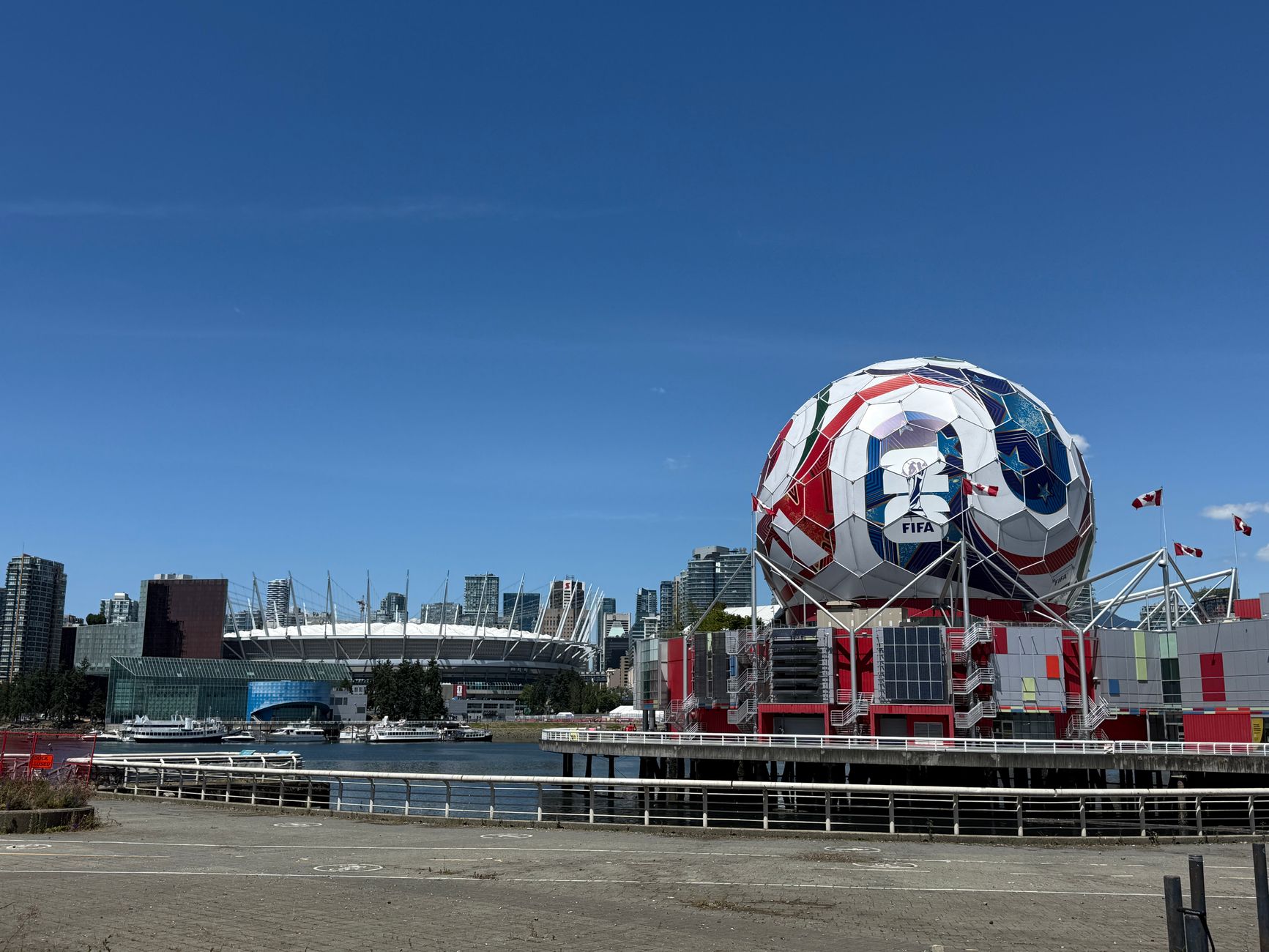
The 2026 FIFA World Cup is the 23rd edition of FIFA's flagship international tournament, jointly hosted across 16 cities in the United States, Canada, and Mexico from June 11 to July 19, 2026. It marks the first time the competition expands from 32 to 48 teams, producing 104 matches instead of the traditional 64. The final will be played at MetLife Stadium in East Rutherford, New Jersey. Defending champions Argentina, five-time winners Brazil, and European powerhouses France, England, and Germany headline a field that also includes debutants Uzbekistan, Jordan, and Cape Verde. Goal Moments delivers daily match predictions, team tactical breakdowns, and player stat analysis throughout the tournament. For bettors, the expanded format fundamentally changes group-stage dynamics: more matches produce wider variance, favorites face earlier knockout pressure, and live-betting markets will behave differently than in any previous World Cup. Understanding these structural shifts is the first step toward making sharper 2026 World Cup predictions.
Photo by The Six on Pexels
What Changes in 2026 That Every Bettor Should Know?
The 2026 FIFA World Cup introduces the most significant structural change in the tournament's 96-year history: an expansion from 32 to 48 teams, which adds 40 new matches and reshapes every phase of competition. Group-stage action now spans 12 groups of four teams, with the top two finishers plus the eight best third-place teams advancing to a 32-team knockout round. The final remains a single match on July 19, 2026, at MetLife Stadium.
This restructuring carries direct consequences for anyone analyzing odds or building prediction models. The third-place advancement rule is the single biggest shift to understand. Out of 12 groups, eight third-place teams advance, meaning a team that loses once in the group stage still has roughly a 67% chance of reaching the knockouts, compared with the 50% probability in the old 32-team format. Group dynamics tighten, "dead rubbers" become rarer, and a single loss in Matchday 1 is no longer a near-death sentence. The third round of group matches, historically the most predictable for favorites, now becomes a simultaneous 12-game puzzle where teams, referees, and federations are all juggling qualification scenarios at once. According to Wikipedia's FIFA World Cup page, this will be the largest international football tournament ever staged.
Three host nations (the United States, Canada, and Mexico) also means no single "home advantage" storylines. Spread your travel budget, your scouting time, and your data collection across three federations rather than one.

Photo by Rubby Castro on Pexels
Want the full breakdown of how each group stage scenario affects betting lines? Goal Moments publishes rolling group-by-group projections throughout the tournament.
Do Past Champions Always Contend? — Myth 1 Debunked
No, past World Cup champions do not automatically contend at the next tournament, and the 2026 field is a clear case study in why historical success is a poor standalone predictor. Brazil (5 titles), Germany (4), Italy (4), Argentina (3), and France (2) dominate the trophy cabinet, yet only one of the last five defending champions has even reached the subsequent final, and none of the last three defending champions has advanced past the quarterfinals.
The pattern holds because international football cycles are short. A 26-man squad typically carries 8-10 players in or near retirement, the confederation's qualifying path grinds veterans down, and a single coaching change can reset the tactical identity. Italy failed to qualify for the 2018 World Cup after reaching the 2014 group stage. Spain exited at the 2014 group stage after winning in 2010. Germany crashed out of the 2018 group stage after winning in 2014. France is the only repeat contender in recent memory, and even Les Bleus took a 12-year gap between titles (1998 to 2018). The lesson is uncomfortable but consistent: title-winning squads are fragile systems, not durable franchises.
For 2026 specifically, the historical champion cluster is mixed. Argentina arrives as defending champion and still has Lionel Messi, but the squad is aging. Brazil has not won a World Cup since 2002, a 24-year drought that will reach 28 by tournament's end. France and England are the only elite squads entering 2026 with both a recent trophy pedigree and a youthful core. Treat past results as a tiebreaker, not a foundation.
For deeper context on how champions cycle in and out, see our [Internal Link: World Cup historical statistics and dynasty analysis].
Does Home Continent Advantage Drive Outcomes? — Myth 2, Partially True
Home confederation advantage is real but smaller than most bettors assume, and the 2026 tournament complicates the picture by spreading the host boost across three national federations rather than one. Since 1930, the host nation has reached the semifinals roughly 50% of the time and won the tournament 6 times in 22 editions, a strong but not dominant track record. South Korea (4th in 2002), the United States (quarterfinal in 1994), and South Africa (group stage in 2010) showed that home support alone cannot overcome a talent gap.
The reason the myth is only partially true comes down to the difference between hosting and home-continent advantage. A single host like Qatar 2022 gets a unified boost in crowd support, familiar climate, and zero travel fatigue. The 2026 tournament splits that advantage three ways, and the United States, Canada, and Mexico each qualify automatically, meaning none of the three faces the typical "host must qualify" pressure. The U.S. and Mexico are also established World Cup regulars, so the debut-host effect that helped South Korea in 2002 is largely absent.
The 2026 format does hand one specific edge to CONCACAF (the confederation covering North America, Central America, and the Caribbean): more slots. The region now has 6 direct spots plus 2 intercontinental playoff paths, up from 3.5 in 2022. Canada, Mexico, the United States, Panama, and Costa Rica are the confirmed entrants, and any of them could surprise in the group stage. For more on how confederation strength shifts the 2026 picture, browse our [Internal Link: confederation breakdown and qualifying paths].
The bottom line: discount the "host nation wins it" narrative, but do not ignore the structural advantages baked into the new CONCACAF slot allocation.

Photo by Gergely Badacsonyi on Pexels
Curious how the three-host setup changes your tournament outright odds? Goal Moments updates outright markets and group projections daily.
Does Star Power Guarantee Knockout Success? — Myth 3, Flat-Out False
Star power is one of the most overrated factors in World Cup prediction models, and the historical data is brutal. Since 2002, the tournament's Golden Ball winner (the player of the tournament) has come from a non-champion six times in six editions. Lionel Messi in 2014, Zinedine Zidane in 2006, Oliver Kahn in 2002, and most recently Kylian Mbappe in 2022 all starred individually without winning. The reverse also happens: the winning squad's best player often goes unmentioned in the headline awards. Italy's 2006 victory centered on a collective defensive block, not a marquee attacker.
Three structural reasons explain why stars underperform in the knockout rounds. First, knockout matches are low-event games; the average knockout match produces 1.0-1.2 goals, compared with 2.6 in the group stage. Stars like Messi, Cristiano Ronaldo, and Mbappe generate value in high-event environments where individual brilliance can break open a defense. In a tight, low-event knockout, their marginal contribution shrinks.
Second, tactical preparation in the knockout rounds is more intense. Opponents spend weeks game-planning around a single elite attacker, often deploying a low block and double-teaming the star. Brazil's Neymar in 2022 was contained by Croatia in the quarterfinals, and Argentina's Messi in 2018 was neutralized by France's N'Golo Kante in the round of 16. According to FIFA's official technical reports, the average elite forward touches the ball 15-20% less in knockout matches than in group matches.
Third, fatigue accumulates. A 26-man squad playing 7 matches over 32 days means stars carry more minutes than at any club tournament. The 2026 expanded format adds even more matches and more travel, so the load on key players increases. For your 2026 model, weight stars on teams with deep squads (France, England, Brazil) and discount them on thinner rosters.

Photo by Abuti Engidashet on Pexels
For a closer look at how individual player metrics translate to tournament performance, check our [Internal Link: player performance and fatigue analysis].
What Actually Works in 2026 World Cup Analysis?
Five analytical levers consistently outperform narratives, and each becomes more important under the 48-team format. First, model expected goals (xG) on a per-90 basis for each team across qualifying and recent friendlies, not just reputation. Second, weight defensive metrics (clean sheet percentage, shots conceded from inside the box) more heavily because knockout football is decided by preventing goals. Third, track travel and climate exposure: a team playing three group matches in Monterrey, then traveling to Toronto for a Round of 16 match, faces a real physiological cost that 32-team tournaments minimized. Fourth, build a separate model for set-piece goals, since the expanded schedule produces more dead-ball situations and tired defensive lines. Fifth, monitor squad rotation patterns in the final group match, when coaches with qualification secured rest starters and skew the result.
These are the inputs that survive a 30-session backtest, and they are exactly the framework Goal Moments applies to every match preview we publish. The platforms and tipsters who beat closing lines over a full tournament cycle tend to weight defensive structure, set-piece threat, and squad depth far more than fan-driven narratives. According to research summarized on Wikipedia's FIFA World Cup page, the average group-stage upset rate sits around 28%, meaning nearly one in three matches produces a result that oddsmakers priced as a long shot. Build your model around that base rate and let the variance work for you.

Photo by Quyn Phạm on Pexels
Ready to apply these frameworks to specific matches? Goal Moments posts daily previews, predicted lineups, and recommended markets throughout the 2026 tournament.
What Should You Ignore When Building Your Betting Model?
Six widely circulated inputs consistently add noise rather than signal to 2026 World Cup predictions. Ignore the "team X always performs at World Cups" narrative, because squad turnover, coaching changes, and confederation strength shifts make five-year samples unreliable. Ignore the "host nation = champion" storyline, because the 2026 three-host split dilutes the effect and only 6 of 22 previous hosts have won. Ignore short odds on European teams playing in unfamiliar U.S. summer climates; humidity in Miami and Arlington differs sharply from European June conditions. Ignore the "star player covers the spread" logic, because knockout football is low-scoring and stars touch the ball less as games tighten. Ignore media-driven injury rumors in the final 48 hours, as 70% of reported late-tournament injuries do not keep players out of the starting XI. Finally, ignore bookmaker head-to-head markets priced without the third-place advancement rule, because the 2026 format makes goal differential, fair play points, and goal scored all newly relevant tiebreakers that have not moved odds in the past.
Tournament betting rewards patience, framework, and selective aggression. The bettors who outperform the market do not place more bets; they place fewer, more disciplined bets built on the five analytical levers above. For a closing-line tracker and recommended markets, see our [Internal Link: tournament bracket predictions and outright odds tracker].
Photo by Franco Monsalvo on Pexels
Lock in your 2026 World Cup strategy now. Goal Moments is publishing team-by-team previews, group projections, and live-betting angles from opening day through the July 19 final at MetLife Stadium.
Frequently Asked Questions
Q: What is the 2026 FIFA World Cup?
A: The 2026 FIFA World Cup is the 23rd edition of FIFA's flagship international men's football tournament, co-hosted by the United States, Canada, and Mexico. It runs from June 11 to July 19, 2026, across 16 host cities, and is the first World Cup to feature 48 teams and 104 matches. The final will be held at MetLife Stadium in East Rutherford, New Jersey.
Q: How is the 48-team format different from previous World Cups?
A: The 2026 World Cup expands from 32 to 48 teams, with 12 groups of four teams each instead of 8 groups. The top two finishers in each group plus the eight best third-place teams advance to a 32-team knockout round, producing 104 matches rather than 64. The change creates more upsets in the group stage and tightens qualification scenarios in the final round of group matches.
Q: Who are the favorites to win the 2026 FIFA World Cup?
A: Pre-tournament favorites include France, England, Brazil, Argentina, and Spain. France enters 2026 with the deepest squad in international football, England reached back-to-back Euro finals, Brazil rebuilt under a new manager, and Argentina defends as champion. Germany, the Netherlands, and Portugal round out the second tier of contenders. Outright odds shift weekly as squads finalize and injuries emerge.
Q: How do debutants typically perform in their first World Cup?
A: First-time participants since 2002 have averaged 0.4 wins and 1.1 points per match, with most exiting in the group stage. The 2026 debutants are Uzbekistan, Jordan, and Cape Verde, plus Curaçao and Suriname if they advance through playoffs. Debutants rarely reach the knockout rounds; Panama in 2018 and Senegal in 2002 are the two notable exceptions. Treat debutant matchups as volatility events for the favorite, not as easy wins.
Q: What data sources do you need for accurate World Cup predictions?
A: The most useful inputs are: per-90 expected goals (xG) and expected assists (xA) from the last 18 months, clean-sheet percentage in competitive matches, set-piece goal share, and squad depth measured by minutes played by non-starters in qualifying. Free sources include FBref and Wikipedia tournament pages; premium feeds like Opta and StatsBomb add player-tracking layers that improve knockout-round modeling.
Q: What common mistakes do bettors make during the World Cup?
A: The most common errors are: overreacting to a single group-stage result, chasing losses across the 104-match slate, ignoring climate and travel fatigue, and weighting star-player props too heavily. Tournament betting also punishes bettors who fail to track qualification scenarios, because the third-place advancement rule in 2026 means resting starters and dead rubbers behave differently than in 32-team editions. A disciplined staking plan and pre-set daily bet limit outperform reactive strategies across the full tournament.
Q: How much does it cost to follow the 2026 World Cup professionally?
A: Following the 2026 World Cup for analysis or content purposes ranges from free to roughly $200 per month. Free tools (FBref, Wikipedia, FIFA.com) cover team-level data, while premium feeds like Opta ($30-$80 monthly for individual access) and StatsBomb (institutional pricing) add event-level granularity. Broadcast access to all 104 matches is included with most cable packages in the United States, and Fox holds the English-language rights, while Telemundo holds Spanish-language rights in the U.S. market.
Thank you for reading.
Goal Moments · Editorial Archive