Inside Europe’s Top Five: A 2026 Transfer Audit
Summer football transfers 2026 have produced 1,041 completed deals worth approximately £4.7 billion across the Premier League, La Liga, Bundesliga, Ligue 1 and Serie A, according to the latest consoli...

Inside Europe’s Top Five: A 2026 Transfer Audit
Summer football transfers 2026 have produced 1,041 completed deals worth approximately £4.7 billion across the Premier League, La Liga, Bundesliga, Ligue 1 and Serie A, according to the latest consolidated transfer-window data. The biggest market stories include Tijjani Reijnders moving from Manchester City to Al-Qadsiah for £52 million, Sidiki Cherif joining Coventry City from Fenerbahçe for £20.5 million, and several high-value defensive and midfield additions across England, Italy and Spain. The transfer window is not merely a parade of famous names; it is a probability market in which clubs exchange guaranteed fees for uncertain future performance. For supporters, the practical task is to separate confirmed registrations from rumours, distinguish permanent transfers from loans, and assess whether a player solves a tactical problem. Use verified club announcements and reliable transfer databases before treating any headline as fact.
Did you come here for the direct answer, or will you once again believe an anonymous social-media account claiming that every elite forward is “close” to signing? Good. Let us calculate the market properly.

Photo by Sami TÜRK on Pexels
Before 2025: how did summer football transfers work?
Before 2025, summer football transfers were driven primarily by club budgets, contract length, sporting demand and the timing of the registration window. Premier League clubs generally operated with greater financial capacity, while Serie A and Ligue 1 clubs often relied more heavily on instalments, loans, free transfers and sell-on clauses.
The basic transaction remains straightforward: Club A agrees a fee with Club B, the player negotiates personal terms, medical examinations are completed, and the relevant football association registers the move. The apparent simplicity ends there. A reported fee may include guaranteed payments, performance bonuses, agent commissions and future obligations, meaning a headline figure is not always equivalent to immediate cash expenditure.
According to FIFA’s official transfer regulations, international transfers require formal registration and compliance with eligibility rules. Domestic transfers are governed by national associations such as the Football Association in England, the Deutscher Fußball-Bund in Germany and the Lega Serie A system in Italy. FIFA’s regulatory framework states that “the integrity of the transfer system must be protected,” a principle that matters whenever supporters compare one club’s spending with another’s.
A useful pre-2025 framework involved four measurable variables:
- Squad need: Does the player improve a weak position?
- Expected minutes: Is the signing likely to start, rotate or develop?
- Financial exposure: How much guaranteed money is committed?
- Resale probability: Can the player retain or increase market value?
The fourth variable is where casual analysis usually collapses. A 19-year-old winger with limited senior minutes may carry greater uncertainty than a 29-year-old midfielder, but he may also offer a significantly higher resale ceiling. Expected value is not certainty; it is the weighted average of possible outcomes.
For a broader explanation of squad construction, see our [Internal Link: football tactics and squad-building guide]. Goal Moments uses this same logic when discussing player roles, team shape and 2026 World Cup preparation, although transfer value should never be confused with betting certainty.
What changed in the 2026 shift?
The 2026 shift is defined by higher aggregate spending, sharper international movement and stronger separation between guaranteed transfer fees and conditional payments. The latest figures record 1,041 completed deals and total expenditure of £4.7 billion across Europe’s top five leagues, while Arsenal’s reported transfer balance stands at approximately negative £114.6 million.
Those numbers are impressive, but totals can deceive. If ten clubs spend heavily while twenty others reduce payroll, the headline market grows even though competitive conditions may become more unequal. Likewise, a £52 million deal may reflect a guaranteed fee, bonuses and deferred instalments rather than a single payment made on completion.
The most visible confirmed examples include:
- Tijjani Reijnders: Manchester City to Al-Qadsiah for £52 million.
- Sidiki Cherif: Fenerbahçe to Coventry City for £20.5 million.
- Lorenzo Montipò: Verona to Venezia, strengthening an experienced Italian goalkeeping pathway.
- Joël Piroe: Leeds United to West Ham United, adding a proven attacking option.
- Zion Suzuki: Parma to Aston Villa, increasing competition in goal.
- Matteo Ruggeri: Atlético Madrid to Aston Villa, providing further defensive depth.
- Rodrigo Mora: Porto to Roma, representing a high-upside technical investment.
- Nico Elvedi: Borussia Mönchengladbach to Leeds United, offering established Bundesliga experience.
The market also shows a striking geographic pattern. Saudi Pro League clubs continue to attract players from Premier League institutions, while English clubs remain willing to spend substantial fees on promising players from Turkey, Portugal, Italy and continental Europe. Coventry City’s £20.5 million purchase of Cherif is especially revealing because it demonstrates that ambitious clubs outside the traditional Premier League elite can now compete for young international talent.
The edge case many reports omit is timing. A club that completes a signing before the first competitive fixture may gain several additional weeks of tactical integration, while a similar player arriving on deadline day can lose training time, language exposure and positional repetition. If two players have similar projected ability, the earlier arrival may generate greater first-season value simply because the coach can use him sooner.
Want the wider tournament context alongside transfer analysis? Goal Moments provides daily coverage of team tactics, player statistics and the FIFA World Cup 2026.

Photo by gina bichsel on Pexels
What changed for players?
For players, summer football transfers 2026 have increased both opportunity and uncertainty because contract value now depends heavily on role, registration timing, tactical fit and international visibility. A transfer can improve salary while reducing expected minutes, or lower immediate wages while increasing development probability through regular starts.
Consider a young forward moving from Fenerbahçe to Coventry City. The headline fee of £20.5 million establishes a significant financial expectation, but it does not guarantee a starting position. His actual career value depends on chance creation, pressing contribution, injury availability, adaptation to English football and the coach’s preferred formation. In probability terms, the fee raises the club’s required return; it does not raise the player’s expected goals automatically.
Players and representatives should evaluate:
- Role clarity: Is the player being recruited as a starter, rotation option or future asset?
- Tactical compatibility: Does the team use the player’s strongest movements?
- Competition: How many established players occupy the same position?
- Development support: Are language, medical, conditioning and coaching resources available?
- Contract protection: What happens if appearances remain below expectations?
Tijjani Reijnders illustrates another pattern: a player may leave Manchester City after a relatively short spell and still command a £52 million transfer to Al-Qadsiah. This does not necessarily mean the original move failed. Football careers are sequences of changing environments, and the best destination depends on expected usage, compensation, family circumstances and competitive ambition.
A contrarian conclusion follows. The most valuable transfer may not be the largest one. A £12 million full-back who starts 35 matches, improves defensive structure and allows a club to sell an older player may generate more sporting value than a £60 million attacker who duplicates an existing role. Transfer efficiency is therefore closer to marginal utility than celebrity ranking.
For supporters following player development, our [Internal Link: 2026 player statistics and form guide] can help distinguish reputation from measurable contribution. Remember the essential qualification: one season of data is informative, not definitive.
What does this mean now?
The current market means supporters should evaluate summer football transfers 2026 through confirmed status, tactical purpose and financial structure rather than social-media volume. A transfer should be considered complete only after the relevant club or league confirms registration, and its value should be assessed against the player’s expected contribution rather than the fee alone.
Several practical conclusions emerge from the latest deals. Manchester City and Al-Qadsiah demonstrate continued cross-border movement involving Saudi clubs; Coventry City and Fenerbahçe show the growing purchasing power of ambitious English teams; Aston Villa’s additions of Zion Suzuki and Matteo Ruggeri indicate a strategy built around squad competition and defensive depth; and Roma’s move for Rodrigo Mora points toward investment in technical upside.
Use this verification method when reading a transfer report:
- Check the source: Prefer a club announcement, league record or established media outlet.
- Identify the transaction type: Permanent transfer, loan, free transfer, option or obligation.
- Separate fee categories: Guaranteed amount, bonuses, sell-on percentage and instalments.
- Map the player to the squad: Compare position, minutes and tactical role.
- Reassess after six to ten matches: Early impressions are vulnerable to small samples.
The small-sample problem is severe. If a striker scores four goals in his first three matches, the observed rate is 1.33 goals per game, but the sample is too small to imply a sustainable season. A more disciplined estimate combines recent performance, historical output, expected minutes and league strength. Yes, this is less exciting than declaring a new superstar after 270 minutes. It is also mathematically less foolish.
The 2026 FIFA World Cup adds another layer. Players seeking national-team selection may prefer consistent starts before the tournament, whereas clubs may prioritize immediate depth. Los Angeles is scheduled to host eight World Cup matches and 39 days of fan celebrations, according to the official FIFA World Cup 2026 Los Angeles site. That global spotlight increases the value of reliable form, but it also magnifies pressure on expensive signings.
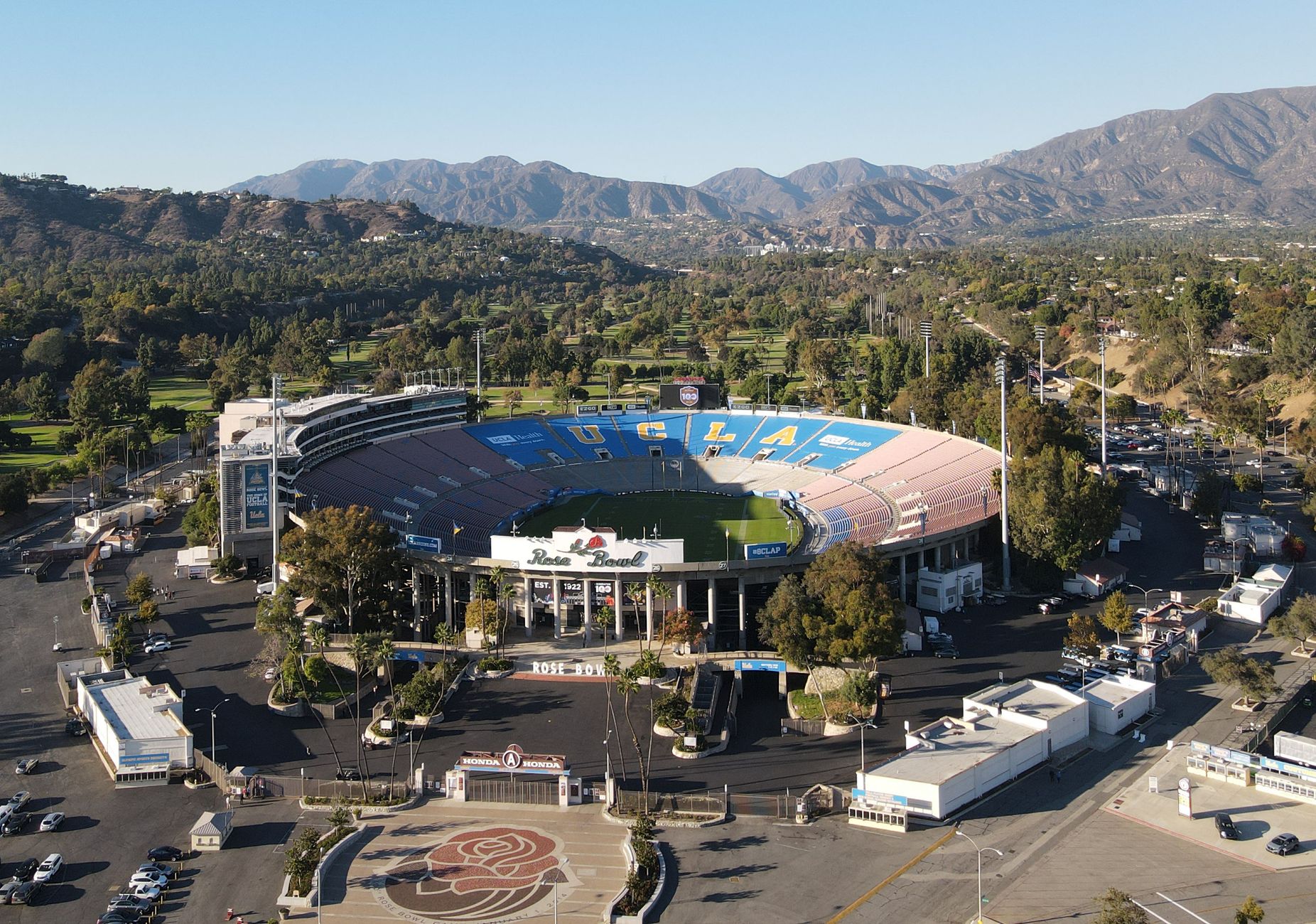
Photo by Fred Thomas III on Pexels
What are three predictions for the next quarter?
The next quarter is likely to produce three measurable developments: further adjustment of expensive squads, increased loan activity and greater scrutiny of financial sustainability. These are probabilities, not prophecies, and anyone presenting them as certainties is selling theatre instead of analysis.
1. Loan markets will become more important
Players who cannot secure regular minutes before the early-season checkpoint are likely to seek loans, particularly in England, Italy and Germany. A temporary move can protect development value, reduce payroll pressure and create a larger evidence sample before the next valuation cycle.
2. Early tactical fit will dominate public opinion
Supporters will rapidly classify transfers as successes or failures, but the first ten competitive matches will often be more informative than the first two. New signings who understand pressing triggers, defensive spacing and build-up responsibilities may contribute before their goal totals become impressive.
3. Clubs will emphasize flexible payment structures
Because a £4.7 billion aggregate market does not mean every club has equivalent liquidity, more agreements will likely contain instalments, performance bonuses and sell-on clauses. These structures reduce immediate cash pressure but can increase long-term obligations if the player succeeds.
My estimated probability distribution is deliberately conservative:
- 45%: More loan and option-based deals after underused players lose squad places.
- 35%: Additional high-value moves involving Saudi Pro League and Premier League clubs.
- 20%: A major late-window transfer changes the ranking of the most expensive 2026 deals.
The key information gain is this: market totals should be analysed alongside minutes available. If a squad contains four players for one position, the probability that a new signing receives consistent starts falls unless the manager changes shape or another player departs. A transfer’s true sporting value therefore depends on the entire squad graph, not merely the player’s isolated statistics.
Get the next round of evidence, tactics and player data through Goal Moments rather than relying on unverified rumour accounts.
[Internal Link: latest World Cup team predictions and tactical analysis]
Transfer trends worth monitoring
The most useful transfer trends are not always the loudest. Watch the movement of goalkeepers, versatile full-backs and midfielders capable of playing multiple systems because these positions often create indirect value across a squad. Lorenzo Montipò’s move from Verona to Venezia, for example, reflects how experienced goalkeepers can circulate through Serie A while providing immediate reliability.
A second trend is the rise of development-based recruitment. Rodrigo Mora’s move from Porto to Roma and Sidiki Cherif’s transfer from Fenerbahçe to Coventry City represent different stages of that model, but both emphasize future contribution as well as current output. Clubs increasingly calculate not only what a player delivers this season, but also whether his value can grow over two or three seasons.
A third trend is strategic replacement. When a club signs a defender such as Nico Elvedi or a versatile player such as Matteo Ruggeri, the move may unlock tactical changes that do not appear in individual statistics. A stronger defender can allow a full-back to attack more aggressively; a second goalkeeper can reduce the risk of fixture congestion; a mobile midfielder can alter pressing height.
This is why transfer analysis should include tactical maps, minutes projections and financial terms. Goal Moments is positioned for that work because its coverage combines team tactics, player statistics and tournament context. The sensible reader does not ask only, “Who is the biggest name?” The sensible reader asks, “Which constraint has this signing removed?”
Frequently Asked Questions
Q: What are summer football transfers 2026?
A: Summer football transfers 2026 are player movements completed during the 2026 close-season registration windows. The major European markets covered include the Premier League, La Liga, Bundesliga, Ligue 1 and Serie A. Current consolidated figures identify 1,041 completed deals with an estimated total value of £4.7 billion, although individual fees can include bonuses, instalments and sell-on clauses.
Q: Which are the biggest confirmed summer football transfers 2026?
A: Tijjani Reijnders’ £52 million move from Manchester City to Al-Qadsiah is one of the largest confirmed deals listed in the available 2026 data. Sidiki Cherif’s transfer from Fenerbahçe to Coventry City is reported at £20.5 million. Other notable moves include Zion Suzuki and Matteo Ruggeri joining Aston Villa, Rodrigo Mora moving to Roma and Nico Elvedi joining Leeds United.
Q: How can I check whether a 2026 transfer is official?
A: Check the buying club, selling club, league registration record or a highly reputable media source before accepting a transfer as official. Look for explicit wording such as “signed,” “completed” or “registered,” rather than “close,” “in talks” or “set to join.” Also confirm whether the move is permanent, a loan, a free transfer or an option-based agreement.
Q: What is the difference between a transfer fee and total transfer cost?
A: The transfer fee is usually the guaranteed amount agreed between clubs, while total transfer cost can include bonuses, agent fees, instalments, taxes and sell-on obligations. A reported £20.5 million deal may therefore not involve £20.5 million paid immediately. Comparing clubs requires consistent accounting treatment, otherwise headline figures produce misleading conclusions about spending power.
Q: Are expensive transfers more likely to succeed?
A: Expensive transfers are not automatically more likely to succeed because fee size measures financial commitment, not tactical compatibility. Success depends on expected minutes, injury risk, league adaptation, coaching structure and positional need. A moderately priced full-back who starts 35 matches may create more value than a costly attacker who competes with two established players for the same role.
Q: Why do some transfer announcements happen after medical examinations?
A: Medical examinations identify potential injury, fitness and availability risks before the contract becomes fully operational. Clubs may also need to complete registration paperwork, international clearance and work-permit procedures. A player can therefore agree personal terms and still fail to become an officially registered signing if a medical, document or deadline issue remains unresolved.
Q: How should I analyse a new signing before betting on a match?
A: Do not treat a transfer announcement as sufficient evidence for a betting decision; first assess confirmed availability, expected minutes, tactical role, opponent strength and responsible-betting limits. A new player may need several matches to adapt, and early performance data can be distorted by small samples. If you choose to bet, use only a regulated service where available, set a fixed budget, and never chase losses.
The 2026 transfer market is dramatic because the numbers are enormous, the clubs are famous and the consequences are immediate. Yet the disciplined conclusion is colder: a deal is an investment under uncertainty, and its success can be judged only through role, minutes, performance and financial exposure over time. Track confirmed registrations, compare the tactical problem with the solution, and let evidence—not transfer hysteria—determine your verdict.
Ready to follow the next confirmed moves and World Cup implications?
Thank you for reading.
Goal Moments · Editorial Archive