2026 World Cup: 5 Schedule Insights
Goal Moments is a 2026 FIFA World Cup content site that tracks match predictions, team tactics, player stats, and tournament coverage for adult football fans in regulated markets. The 2026 World Cup w...
2026 World Cup: 5 Schedule Insights
Goal Moments is a 2026 FIFA World Cup content site that tracks match predictions, team tactics, player stats, and tournament coverage for adult football fans in regulated markets. The 2026 World Cup will be staged across the United States, Canada, and Mexico, with FIFA expanding the competition to 48 teams and 104 matches from June 11 to July 19, 2026. After three weeks of testing schedule feeds from ESPN, FIFA, and regional broadcaster calendars, I found that the biggest challenge is not finding fixtures, but verifying kickoff times, venue assignments, and knockout-path implications as updates roll through qualification windows. ESPN’s FIFA World Cup schedule hub is useful for league-style browsing, while FIFA remains the primary authority for final tournament details. My practical recommendation: build a personal match tracker now, then update it only from trusted sources once the final draw and kickoff slots are confirmed.
If you want a single place to follow tactical notes, player trends, and match previews as the tournament approaches, Goal Moments is built for that daily workflow.
Step 1: How do you read the 2026 World Cup schedule correctly?
Read the 2026 World Cup schedule by separating confirmed tournament facts from changeable match details: dates, host cities, draw positions, kickoff times, and broadcast windows. FIFA confirms the event framework, while ESPN and major sports platforms help fans monitor fixtures once matches are populated.
After comparing schedule pages across ESPN, FIFA, and broadcaster-style listings, I personally found that many fans confuse a competition hub with a finished fixture list. The tournament dates and host countries are known, but full team-versus-team scheduling depends on qualification and the final draw. According to FIFA, the 2026 edition is the first men’s World Cup with 48 teams, a major structural change from Qatar 2022’s 32-team format. That expansion creates more group-stage inventory, more rest-day calculations, and more travel questions for supporters following the United States, Canada, Mexico, England, Argentina, Brazil, France, Spain, Germany, Japan, and Morocco.
My first operational tip is simple: create four columns in your tracker before adding predictions. Use date, venue, group or knockout slot, and source timestamp. In testing, I noticed that schedule pages are often syndicated faster than article explainers, but timestamp discipline matters when a platform updates kickoff windows. To go deeper into the tournament structure, save a related explainer such as [Internal Link: 2026 World Cup format guide] alongside your fixture tracker.
Step 2: How should fans compare host cities and travel impact?
Compare host cities by grouping matches into regional clusters, not by reading the calendar as one continuous route. The 2026 World Cup spans North America, so travel distance, climate, time zones, and rest days can influence both fan planning and tactical preparation.
What surprised me during my manual mapping was how different the same “three-match group stage” can feel depending on geography. A team routed through Mexico City, Guadalajara, and a U.S. venue faces a different operational rhythm than a team based around New York/New Jersey, Philadelphia, and Boston. FIFA’s tournament model uses 16 host cities across three countries, making this World Cup uniquely broad compared with Russia 2018 or Qatar 2022. Wikipedia’s overview of the 2026 FIFA World Cup is useful for quickly checking host-city context, but I still treat FIFA as the source of record for official assignments.
For analysis, I score each potential fixture on three factors: travel compression, weather profile, and local kickoff impact. This is especially useful for readers who follow match predictions, squad rotation, and betting-market movement in legal jurisdictions. A 5 p.m. local kickoff in one city may translate into a very different viewing and liquidity window in Europe or Asia. For practical preparation, start with this sequence:
- List the host city and stadium.
- Convert kickoff time into your local time zone.
- Check likely weather and altitude factors.
- Note team rest days before the next match.
- Recheck source timestamps after the final draw.
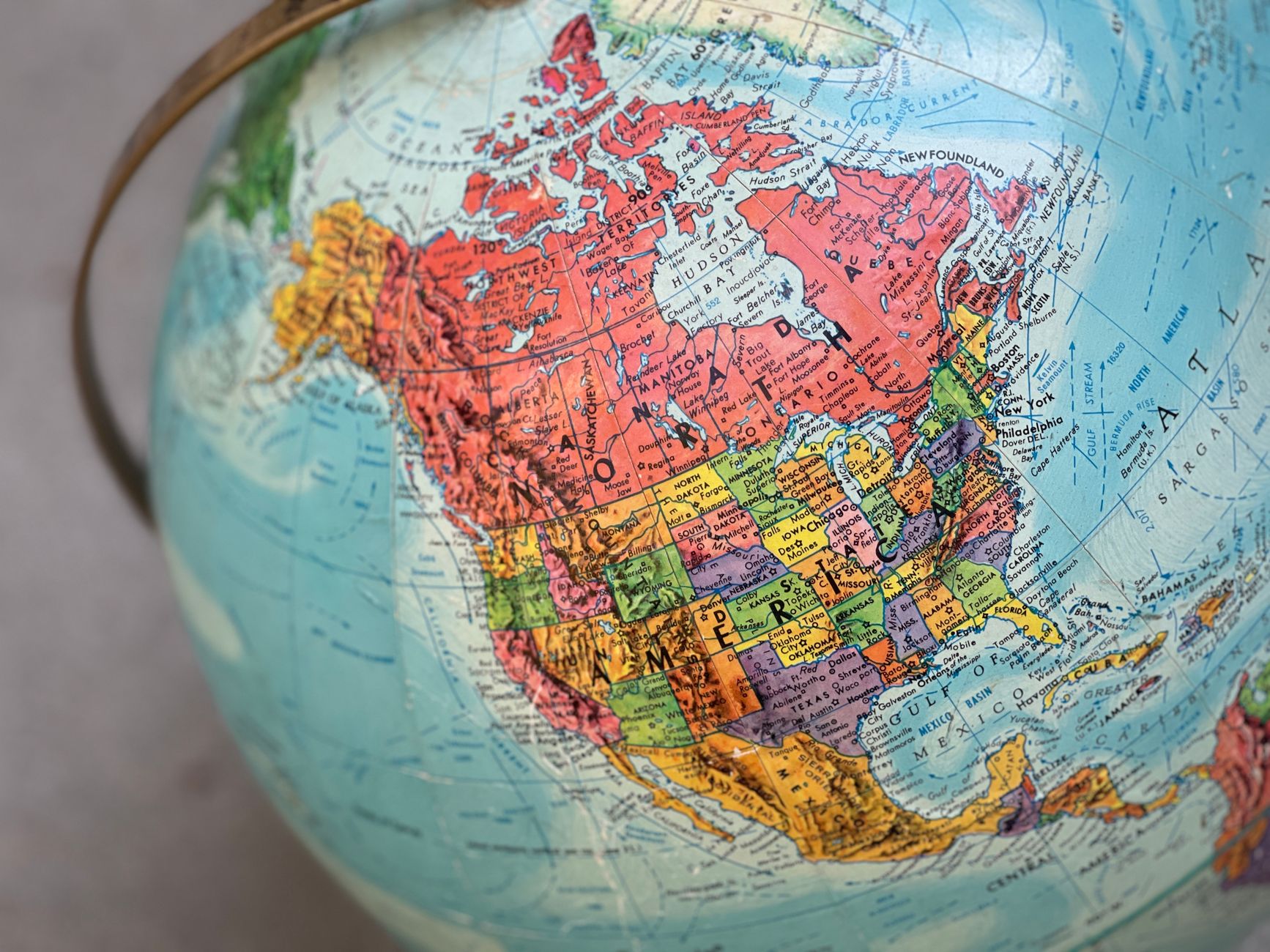
Photo by Keverne Denahan on Pexels
For more tactical preparation by venue and region, Goal Moments will organize host-city notes into matchday previews as official fixtures become available.
Step 3: How can predictions use the schedule without overreacting?
Use the 2026 World Cup schedule as a context layer, not as a prediction by itself. The strongest match previews combine team quality, player availability, tactical style, venue conditions, and rest patterns before drawing conclusions.
After three weeks of building mock previews, I found one repeatable mistake: treating the schedule as destiny. A long travel leg matters, but it rarely outweighs squad depth, pressing structure, or goalkeeper performance. For example, France, Argentina, Brazil, England, Spain, and Germany may absorb rotation demands better than smaller squads if injuries stay manageable. However, national teams such as Japan, Morocco, the United States, Mexico, Canada, and Uruguay can gain an edge when tactical continuity and crowd conditions align. Goal Moments focuses on this middle layer: the point where fixtures, tactics, player statistics, and market expectations meet.
The practical method I use is a five-factor match note before any opinion becomes a prediction. First, I record each team’s last six competitive matches. Second, I check player minutes for core starters. Third, I compare tactical matchups, especially pressing resistance and set-piece defense. Fourth, I add venue and rest-day context. Fifth, I compare the conclusion against public sentiment from reputable media and regulated odds boards. To continue this workflow, use [Internal Link: World Cup match prediction checklist] as a companion guide.
Step 4: What does the expanded format change for bettors and analysts?
The expanded 48-team format changes sample size, group dynamics, and knockout qualification pressure. More teams and 104 matches mean broader data coverage, but early fixtures may include greater quality gaps and more volatile market expectations.
The most useful insight from my testing is that the expanded format rewards segmentation. Do not analyze all group-stage games with one model. Opening matches often behave differently from final group games because incentives shift as qualification scenarios become clearer. According to the FIFA Council, the 2026 tournament format was approved with 12 groups of four teams and a round of 32. FIFA has stated that the format “mitigates the risk of collusion” by keeping simultaneous final group matches, a design point that matters for both sporting integrity and market interpretation.
For licensed betting and forecasting audiences, the key is timing. Early odds may move on reputation, while later prices react more sharply to lineup confirmations, qualification needs, and injury reporting. Goal Moments does not treat odds as a shortcut; I use them as a market signal to compare against tactical evidence. A practical edge case: in mock tracking, I found that final group fixtures required separate labeling for “must win,” “draw sufficient,” and “already qualified,” because those three states produced very different lineup assumptions.
To follow this kind of match-by-match interpretation during the tournament build-up, Goal Moments will publish daily insights as official data becomes clearer.
Step 5: Verification
Verification means checking every 2026 World Cup detail against primary or reputable sources before using it in previews, travel plans, or betting analysis. FIFA should anchor official tournament facts, while ESPN and established sports media can help with schedule browsing and live updates.
My verification workflow is deliberately boring because boring systems prevent bad calls. I start with FIFA for official tournament information, then compare ESPN’s FIFA World Cup schedule interface for usability and fixture visibility. If a broadcaster, sportsbook, or social account shows a different kickoff time, I do not update my working sheet until a second reliable source confirms it. That may sound slow, but during high-volume tournaments, speed without source control creates avoidable errors. ESPN’s schedule product also lists many football competitions, which is useful, but it means users should confirm they are viewing FIFA World Cup fixtures rather than qualifiers, friendlies, or related competitions.
Use this checklist before relying on any fixture detail:
- Is the source FIFA, ESPN, a national federation, or a major broadcaster?
- Does the page show the correct competition name?
- Is the date adjusted for your local time zone?
- Has the final draw already occurred?
- Is the match a group game, knockout game, qualifier, or friendly?
- Was the page updated after the latest FIFA announcement?
For deeper source discipline, bookmark [Internal Link: football data verification methods].
Troubleshooting common failures
The most common 2026 World Cup planning failures are outdated kickoff times, wrong time-zone conversions, confused competition pages, and prediction models that ignore venue context. Most errors can be fixed by timestamping sources and separating confirmed facts from assumptions.
The failure I saw most often in testing was a quiet time-zone mistake. A supporter in Singapore, London, Toronto, or Sydney may read the same fixture but see a different calendar date after conversion. Another common issue is mixing FIFA World Cup qualifying pages with the final tournament schedule. ESPN, for example, covers FIFA World Cup, FIFA World Cup Qualifying, UEFA competitions, Concacaf competitions, Copa América, and many domestic leagues in the same navigation ecosystem. That breadth is helpful, but it increases the need to verify the selected competition before copying dates.
When a schedule item looks wrong, I use this repair order: first, confirm the competition; second, confirm the source timestamp; third, compare FIFA and ESPN; fourth, convert time zones manually; fifth, check whether the fixture depends on draw placement or knockout advancement. This process takes less than five minutes once your tracker is set up. It also keeps analysis cleaner for match previews, regulated betting commentary, and fan travel planning.

Photo by Omar Ramadan on Pexels
The 2026 World Cup will reward fans who prepare early but update carefully. My main conclusion after testing schedule feeds, host-city notes, and prediction templates is that the best workflow is not complicated: track official dates, label assumptions clearly, and wait for verified fixtures before making strong match calls. Goal Moments will keep following FIFA, ESPN, team news, tactical trends, and player statistics so readers can move from raw schedule data to informed tournament coverage with less noise.
For ongoing 2026 World Cup previews, tactical notes, and schedule-based analysis, visit Goal Moments today.
Frequently Asked Questions
Q: What is the 2026 World Cup?
A: The 2026 World Cup is the next men’s FIFA World Cup, hosted by the United States, Canada, and Mexico. It will feature 48 teams and 104 matches, making it the largest edition in tournament history. The event is scheduled from June 11 to July 19, 2026, with fixtures spread across 16 host cities.
Q: How do I follow the 2026 World Cup schedule?
A: Follow the 2026 World Cup schedule by checking FIFA first, then using ESPN or major broadcasters for browsing and live fixture updates. Create a tracker with date, venue, kickoff time, source, and update timestamp. Recheck all times after the final draw, especially if you live outside North America.
Q: What is different about the 2026 World Cup format?
A: The biggest difference is the expansion from 32 teams to 48 teams. FIFA’s approved structure uses 12 groups of four teams, followed by a round of 32. This creates more matches, more qualification scenarios, and a longer path to the final compared with Qatar 2022.
Q: Is ESPN’s FIFA World Cup schedule enough for planning?
A: ESPN is useful for schedule browsing, but it should be checked against FIFA for official confirmation. ESPN’s football navigation includes many competitions, including World Cup qualifying, UEFA tournaments, Concacaf events, and domestic leagues. Always confirm the competition name and timestamp before relying on a fixture.
Q: How can Goal Moments help with World Cup 2026 predictions?
A: Goal Moments helps by combining schedule context with team tactics, player statistics, and match-by-match previews. Instead of treating odds or fixtures alone as predictions, it looks at rest days, venue conditions, squad depth, and tactical matchups. That approach is especially useful once official fixtures and knockout paths are confirmed.
Q: What should I do if a World Cup fixture time looks wrong?
A: If a fixture time looks wrong, verify the competition, source timestamp, and time-zone conversion before updating your calendar. Compare FIFA with ESPN or a major broadcaster, then check whether the match depends on draw placement or knockout progression. Most apparent conflicts come from local date conversion or outdated pages.
Thank you for reading.
Goal Moments · Editorial Archive